Lucille Tachet, October 3, 2022
How Pixwire can help you reduce your digital carbon footprint
When we browse, stream video or exchange photos online, we are emitting some CO2. We estimate that between 2 and 3% of greenhouse gas emissions worldwide can be attributed to the technology industry1. This is comparable to the aviation industry which emits 2% of global greenhouse gases2. With the population connected to the internet growing by about half a million new users every day3, we have to act to reduce our impact. But we are probably not ready to throw our cellphones and computers away yet...
At Pixwire, we believe that we can use technology to lower our impact, and that without even changing our habits. So, let’s have a look at two things Pixwire is doing to help us reduce our digital carbon footprint: a smart way to store data and an innovative way to retrieve them.
Smarter storage
To start, let’s remember that “the cloud” is where a lot of things, including our emails, accounts or photos, are stored online. When data is stored in the cloud, it’s just another way of saying that it is stored in data centres. A data centre is simply a huge room full of computers able to compute and store lots of data. They are super energy-guzzling and need to be fed with a lot of electricity not only to run but also to be cooled. So of course, the cloud provides a lot of useful services but we need to keep in mind that it’s not all perfect.
That said, all data centres aren't equal and where the data is stored matters. The electricity used to power the systems could be coming from fossil fuel or green durable sources. At Pixwire, we do our best to use servers that are in alignment with our values and have a limited impact.
Collaboration is key
Not so long ago people with cameras would develop their pictures on paper. They would make additional copies of their favourite photos to give to their friends and family. Today, we still do the same: someone takes a picture, and shares it with their friends and family and everyone saves their own copy on their phone and sometimes in the cloud. This multiplies the weight of the photo by the number of people the picture is shared with. This doesn’t seem ideal for our digital footprint, especially when this is true for each picture that we share.
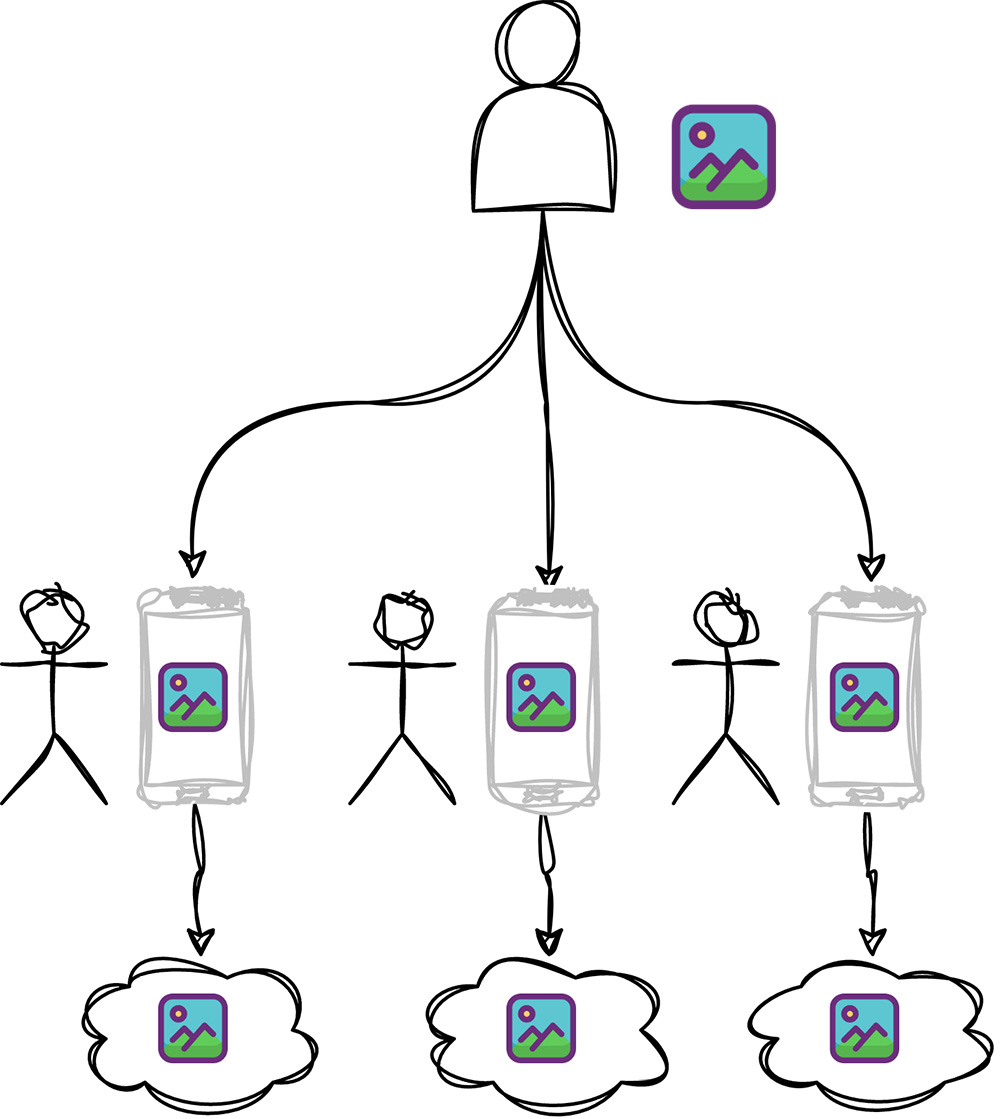
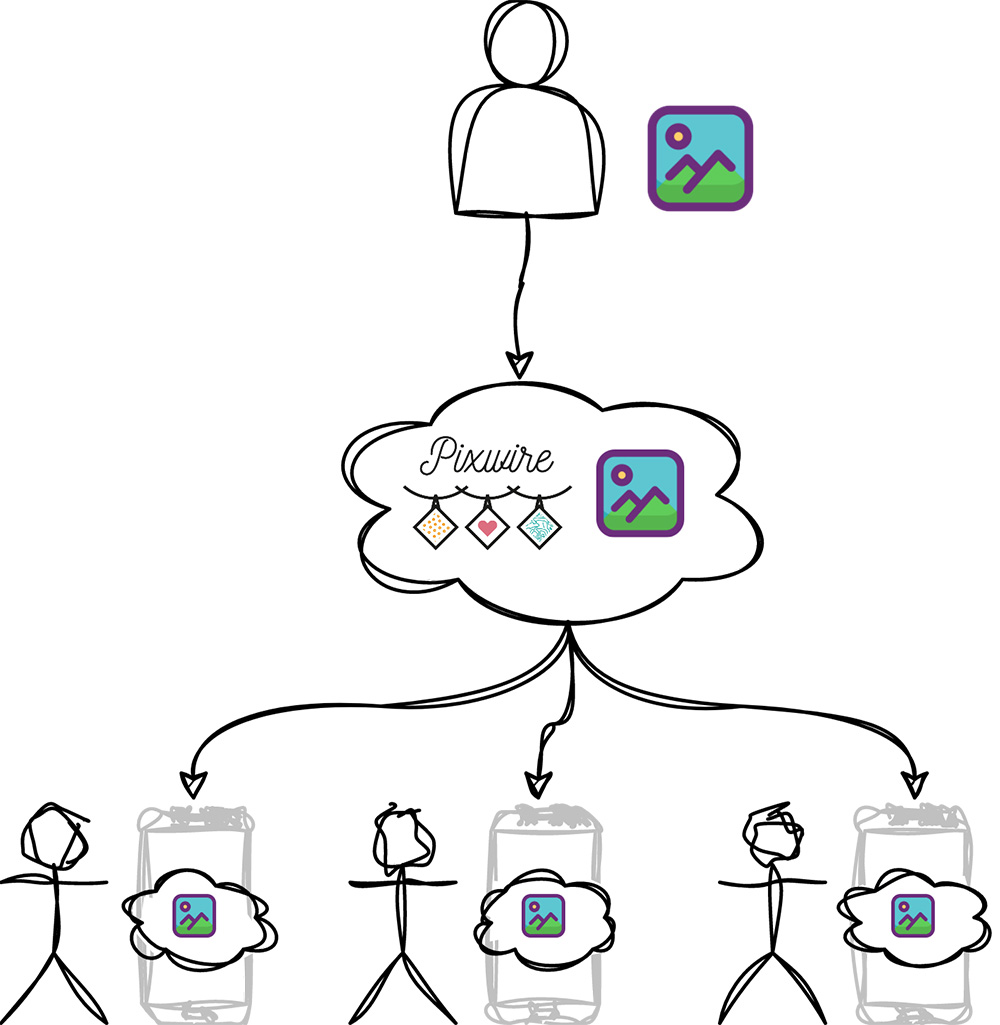
This is where Pixwire innovates: there isn’t actually a need to make a copy! When someone shares a picture, the application points to this unique version safely stored in the cloud. In addition to the ecological impact, it also means that we can collectively pay less for the storage while also sharing the hard work of tagging and categorising the picture with others.
Be organised, and (automatically) save what matters
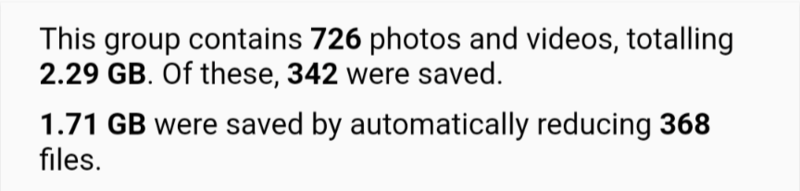
It’s also easy to save all of our pictures in the cloud. We probably want to make sure that the important ones won’t be lost. But what about the photos that do not matter? For example, the ten tries to take a selfie with a dog or the blurred pictures of that last concert? Sorting these pictures is important, we estimate that duplicated and unwanted images left in storage accumulate 10.6kg of CO2 emissions per person annually4.

Thanks to Pixwire, we can like pictures as we share them in our groups. It means that we can sort them on the fly and keep in full quality only the ones that matter.
Download only what’s needed
Outside of data storage, the simple fact of using an application, uploading or downloading data also has a certain cost. Network connections use electricity as data is being transferred.
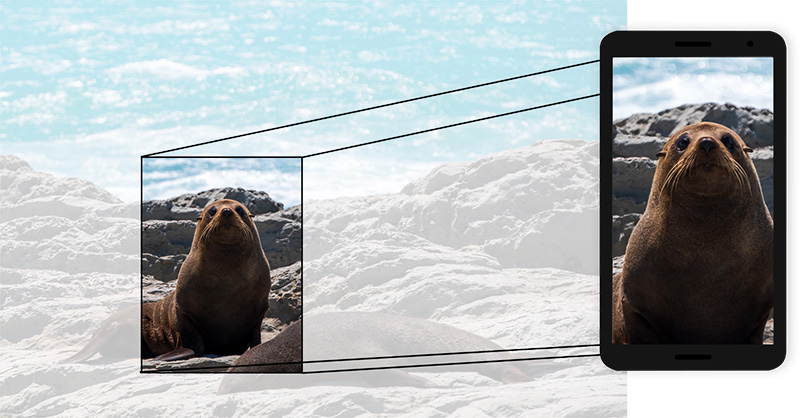
Once again, Pixwire innovates with the implementation of smart zooming. Despite the photo being saved in its original quality, it’s usually just a few areas that interest us in a picture. For example, the faces or the centrepiece... Our algorithm cut the picture into multiple small rectangles. When someone zooms in on the photo, we only download in full quality the ones that are displayed on the screen. This is a great way to load the details you want to see faster, while at the same time saving data transfer.
Conclusion
The impact that the cloud has on our planet means that we all have to be careful about our digital footprint. But being eco-friendly doesn’t always have to be a trade-off. In our case these features also make our life easier!
Notes
-
1 - https://www.bitkom.org/sites/main/files/2020-05/2020-05_bitkom_klimastudie_digitalisierung.pdf ↩
-
2 - https://ourworldindata.org/co2-emissions-from-aviation ↩
-
4 - https://news.sky.com/story/dirty-data-posting-pictures-online-and-storing-emails-are-contributing-to-climate-crisis-says-report-12444665 ↩